
 Resources
Teen Thinks Therapy Doesn't Work? How Parents Can Help
Published On 31-10-2026
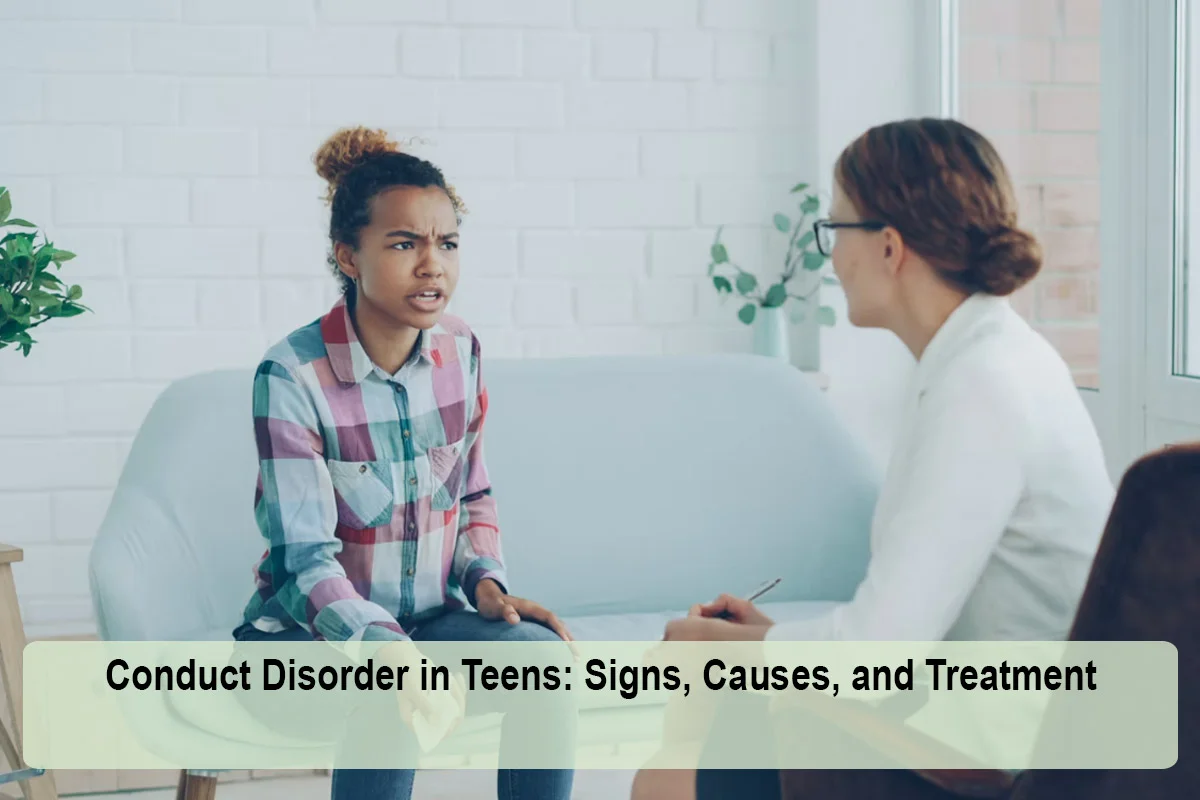
Every teen breaks rules. But some parents are dealing with something far beyond curfew fights and back talk: fights that leave other kids hurt, stealing, cruelty to a pet, fires, repeated running away or a teen who seems not to care who gets hurt. If that sounds like your home, you may have heard the term conduct disorder. It can be a frightening label, but it is also a doorway to the right kind of help. Conduct disorder in teens is a recognized mental health condition, and early, family-centered treatment can change its course.
This guide explains what conduct disorder in teens is, how it differs from oppositional defiant disorder and ordinary rebellion, what causes it, what treatment works and what to avoid. If anyone in your home is in danger right now, call 911. If your teen talks about suicide, call or text the 988 Suicide and Crisis Lifeline.
MedlinePlus, from the National Library of Medicine, describes conduct disorder as a set of ongoing emotional and behavioral problems in children and teens that may involve defiant or impulsive behavior, drug use or criminal activity. The core feature is a repeated pattern of behavior that violates other people's rights or major age-appropriate rules, not a single bad incident.
Clinicians often describe two forms based on when symptoms start: childhood-onset, when at least one symptom appears before age 10, and adolescent-onset, when symptoms begin in the teen years. Childhood-onset conduct disorder tends to be more persistent. Clinicians may also note whether a young person shows limited remorse, empathy or emotion, since that pattern affects treatment planning.
The CDC's children's mental health data reports that about 8% of US children ages 3 to 17 have a current diagnosis of a behavior disorder, including 10% of boys and 5% of girls. That category includes both oppositional defiant disorder and conduct disorder, so the rate for conduct disorder alone is lower. MedlinePlus notes that conduct disorder is more common in males and is often linked with attention problems such as ADHD.
MedlinePlus lists behaviors that can be part of conduct disorder. They tend to fall into four groups:
MedlinePlus also notes that teens with conduct disorder may show little guilt or empathy, rarely express emotions, struggle to form real friendships and seem unconcerned about poor performance at school.
These three are often confused. The biggest difference is whether the behavior harms other people or violates their rights.
| Feature | Typical teen rebellion | Oppositional defiant disorder (ODD) | Conduct disorder |
|---|---|---|---|
| Core pattern | Pushes limits, argues, wants independence | Angry, irritable, argumentative, defiant toward authority | Violates others' rights and major rules |
| Aggression | Rare, usually verbal | Mostly verbal, temper outbursts | Physical fights, cruelty, threats, weapons |
| Property | Occasional carelessness | Rarely destructive | Vandalism, fire setting, theft |
| Remorse | Usually feels bad afterward | Often blames others but has feelings | May show little guilt or empathy |
| Legal trouble | Uncommon | Uncommon | More common |
| Response to structure | Improves with fair limits | Improves with parent training and consistency | Needs intensive, family-based treatment |
Some teens with ODD go on to develop conduct disorder, but many do not. For ODD-specific strategies, see our article on parenting tips for teen oppositional defiant disorder. For milder disrespect, our guide to dealing with disrespectful teenagers may be a better fit.
Conduct disorder usually develops from a mix of biological, family and environmental factors. MedlinePlus links it to:
Other contributors clinicians often consider include trauma, harsh or inconsistent discipline, exposure to violence, peer groups that reward rule-breaking, learning difficulties and untreated ADHD. MedlinePlus also notes that conduct disorder symptoms can be an early sign of depression or bipolar disorder. Understanding these factors is about finding the right treatment, not assigning blame. Our article on teen trauma signs and treatment explores how trauma can show up as behavior.
There is no single test. According to MedlinePlus, conduct disorder is diagnosed from a history of conduct-related behaviors. A physical exam and blood tests may rule out medical conditions, and brain imaging is occasionally used to check for other disorders. A thorough evaluation by a child and adolescent psychiatrist or psychologist will usually include:
Bring records: school reports, disciplinary notices and a timeline of when behaviors began. The age of onset helps shape the diagnosis and plan.
MedlinePlus states that treatment works best when it starts early and involves the family. Effective approaches include:
Parents learn specific techniques for responding to problem behavior: clear rules, consistent consequences, praise for positive behavior and calm limit setting. This is one of the most researched treatments for youth behavior problems.
Functional family therapy and other family therapy models address conflict patterns, communication and supervision at home. Programs with an intensive family program bring parents directly into treatment.
CBT helps teens recognize anger triggers, solve problems, consider others' perspectives and practice alternatives to aggression.
Behavior plans, special education services when appropriate and close communication between home and school help keep progress consistent across settings.
Medication or therapy may be used for co-occurring conditions such as ADHD or depression. There is no medication that treats conduct disorder directly, but treating ADHD, mood or anger problems can make behavior therapy more effective. Teens with substance use need co-occurring treatment.
Desperate parents are often marketed boot camps, behavior modification schools and similar programs. MedlinePlus states that there is no research supporting these programs for conduct disorder and that treating the child at home with the family is more effective. If a higher level of care is truly needed for safety, look for licensed, clinically staffed programs that involve the family, use evidence-based therapy and allow regular contact. Our guide on where to send a defiant teenager explains how to evaluate placement options.
| Try | Avoid |
|---|---|
| Calm, short statements: "Hitting is not okay. The consequence is losing your phone tonight." | Yelling, long lectures or threats you will not follow through on |
| Praising specific positive actions: "Thanks for walking away from that argument." | Only noticing the bad behavior |
| Predictable consequences agreed on in advance | Harsh or physical punishment, which tends to increase aggression |
| Supervising where your teen is, who they are with and what they are doing | Giving up on monitoring because "they won't listen anyway" |
| Separating the teen from the behavior: "I love you. I won't accept stealing." | Labels like "You're a criminal" or "You're bad" |
If your teen's behavior includes violence, threats or fire setting, safety comes first. Lock up firearms, medications, alcohol, lighters and valuables. Make a plan with other family members about where to go and whom to call during an outburst. Call 911 if anyone is in immediate danger. Our articles on violent behavior in teen boys and dealing with an unruly teen cover de-escalation and safety planning in more depth. If your teen is threatening to leave, see son threatened to run away.
Consider more intensive treatment if outpatient therapy has not helped, behavior is escalating, your teen has legal charges, substance use is involved or the home is no longer safe. Options include an intensive outpatient program, a partial hospitalization program or residential treatment that keeps the family involved. Programs serving adolescents include MK Boys Academy, Nexus Teen Academy Mesquite and Hillcrest Adolescent Treatment Center; confirm that a program treats conduct problems and your teen's age. You can browse programs for boys, programs for girls or search FindTreatment.gov. The SAMHSA National Helpline at 1-800-662-4357 offers free referrals around the clock.
MedlinePlus reports that children who are diagnosed and treated early usually overcome their behavioral problems, while those with severe or frequent symptoms who cannot complete treatment have the poorest outlook. That makes two things clear: do not wait, and stay with treatment even when progress is slow. Parents who stay involved, consistent and connected give their teen the best chance.
Conduct disorder in teens goes beyond ordinary defiance. It involves a repeated pattern of aggression, destruction, deceit or serious rule-breaking that harms others. It is also treatable. Get a thorough evaluation, choose family-based therapy with real evidence behind it, treat co-occurring conditions, keep your home safe and steer clear of programs that rely on fear instead of treatment. With early help, many teens with conduct disorder build healthier relationships and futures.
This article was reviewed by the RehabsNearMe Editorial Team for accuracy, clarity, and relevance. Information may be sourced from publicly available treatment resources, government agencies, and healthcare references where applicable.
Last reviewed: October 2026
Resources
 Resources
 Resources
 Resources