
 Resources
Benefits of Teen Meditation: What the Research Shows
Published On 01-11-2026
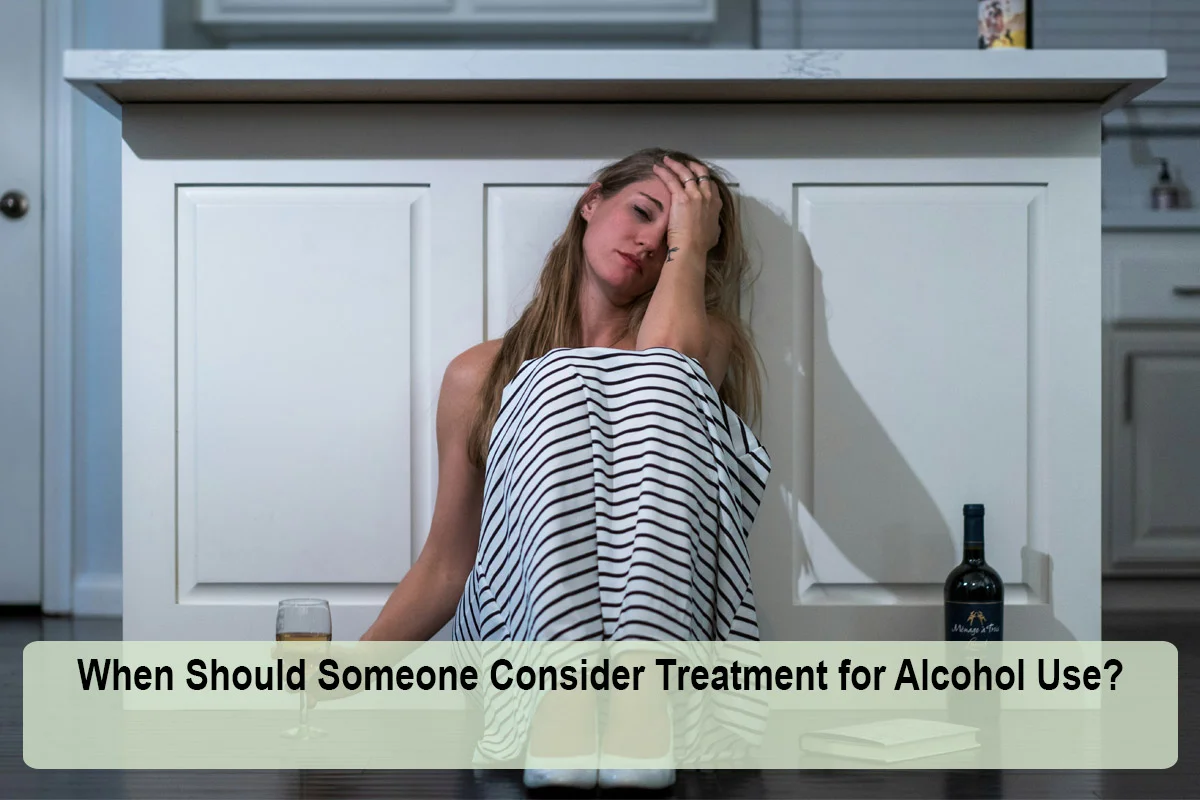
This is a different question than whether drinking meets diagnostic criteria for a disorder, a topic our guide to when drinking becomes alcohol use disorder covers in detail. This piece is about timing and urgency specifically: when the risk of continuing to drink, or the risk of stopping without medical support, means treatment should not wait. For alcohol specifically, that timing question carries a medical weight that many other substances do not.
Alcohol withdrawal is uniquely dangerous among commonly misused substances because of how the brain adapts to sustained heavy use. Chronic alcohol exposure suppresses excitatory brain activity through changes to GABA and NMDA receptor systems, and the brain compensates by upregulating excitatory signaling to maintain balance. When alcohol is suddenly removed, that compensatory excitatory activity is left unopposed, which is what produces the tremors, anxiety, and, in severe cases, seizures and delirium tremens associated with alcohol withdrawal. This is a fundamentally different mechanism than opioid withdrawal, which is severely uncomfortable but rarely directly life-threatening; alcohol withdrawal can kill.
This distinction is worth sitting with, because it cuts against a common intuition. Opioids carry a far more serious public reputation for danger, largely because of overdose statistics associated with active use, particularly given today's fentanyl-adulterated supply. But the specific act of stopping, the withdrawal process itself, runs in the opposite direction: unsupervised opioid withdrawal is miserable but rarely fatal, while unsupervised alcohol withdrawal, in the wrong circumstances, genuinely can be. Neither point diminishes the other; both substances carry serious risks, just concentrated at different points in the process. For alcohol specifically, that risk is concentrated squarely at the moment of stopping.
The numbers back this up specifically. According to research summarized in clinical literature, alcohol withdrawal seizures occur in roughly 5 to 25 percent of people going through withdrawal, typically peaking between 24 and 48 hours after the last drink. Delirium tremens (DTs), the most severe stage of alcohol withdrawal, develops in an estimated 3 to 5 percent of people with alcohol withdrawal syndrome, and according to the National Institute on Alcohol Abuse and Alcoholism, carries a mortality rate of 5 to 15 percent without treatment. With appropriate medical management, that mortality risk drops substantially. The difference between those two numbers is, in large part, the difference between attempting withdrawal alone and doing it under medical supervision.
This is the piece of alcohol withdrawal science that deserves far more attention than it typically gets. Researchers Ballenger and Post documented a phenomenon called the kindling effect, in which each successive episode of alcohol withdrawal tends to become neurologically more severe than the last, not less. The brain essentially becomes progressively more sensitized to withdrawal with repeated cycles of heavy drinking followed by abrupt cessation, meaning someone who has "detoxed on their own" several times before is not necessarily in a safer position than someone doing it for the first time. In many cases, they are in a more dangerous one. A history of multiple prior withdrawal attempts is consistently identified as one of the strongest predictors of a severe withdrawal episode, including seizures and DTs, in someone's next attempt.
This has a direct, practical implication that runs counter to how most people think about their own drinking history: if you have stopped drinking abruptly before and gotten through it without serious incident, that track record does not mean your body will handle it the same way next time. It may mean the opposite.
| Risk Factor | Why It Matters |
|---|---|
| History of prior withdrawal seizures or DTs | The single strongest predictor of a severe episode next time, due to the kindling effect |
| More than 10 years of heavy daily drinking | Longer exposure produces deeper neuroadaptive changes and higher risk |
| Multiple past detox attempts | Each cycle of withdrawal without full neurological recovery increases sensitization |
| Age over 40 to 65, depending on the source | Older age is consistently associated with increased withdrawal severity risk |
| Co-occurring medical illness | Infections, liver disease, and other conditions compound withdrawal risk and complicate management |
| Concurrent benzodiazepine use or dependence | Shares a withdrawal mechanism with alcohol, increasing combined risk |
If any of these apply to you, that is a specific, concrete reason to treat "time to consider treatment" as now rather than later, and to rule out attempting to stop on your own entirely. None of these factors need to be present in combination to matter; even one, particularly a documented history of a prior seizure or DT episode, is sufficient reason on its own to involve a medical provider before the next attempt to stop.
Beyond meeting DSM-5 criteria for AUD, several situational signals specifically suggest the moment to seek treatment has arrived rather than remaining an open question:
Consider someone who has been drinking heavily every day for eight years, has stopped on their own twice before, once for about a week each time, with nothing worse than a rough few days. They are now considering stopping again on their own a third time. Given the kindling effect, this history does not predict a similarly manageable experience; if anything, the two prior withdrawal episodes have made a third one more neurologically primed for severity, not less. Combined with eight years of heavy daily drinking, a risk factor in its own right, this is a situation where medical evaluation before attempting to stop is not an overcautious suggestion. It is a directly indicated safety step given what the withdrawal research actually shows about this exact profile.
Clinicians assess withdrawal severity using the Clinical Institute Withdrawal Assessment for Alcohol, Revised (CIWA-Ar), a validated scale used to guide treatment decisions in real time. Scores of 8 or below indicate mild withdrawal, 9 to 15 indicate moderate withdrawal, and above 15 indicate severe withdrawal with meaningful seizure and DT risk. Someone with mild withdrawal and no significant risk factors may be appropriately managed in an outpatient setting with close monitoring by a support person, while moderate to severe withdrawal, or the presence of risk factors like those listed above, generally calls for inpatient medical detox. Medications, most commonly benzodiazepines along with thiamine to prevent a separate neurological complication, are standard, evidence-based tools used to manage this process safely. Our guide comparing home detox to medical detox goes into more detail on how this decision gets made.
It is worth understanding why thiamine specifically gets included alongside benzodiazepines in standard alcohol withdrawal management. Chronic heavy drinking commonly causes thiamine deficiency, and administering glucose without first replenishing thiamine in a thiamine-deficient patient can trigger a serious neurological condition called Wernicke's encephalopathy. This is a small but telling example of how alcohol withdrawal management involves more than simply riding out symptoms; it requires anticipating and preventing complications that are not obvious from the withdrawal symptoms themselves, which is a large part of why professional oversight matters even in cases that seem, on the surface, relatively mild.
Once withdrawal is safely managed, the next question is what ongoing treatment looks like, which our complete guide to alcohol addiction treatment covers in depth.
This article was reviewed by the RehabsNearMe Editorial Team for accuracy, clarity, and relevance. Information may be sourced from publicly available treatment resources, government agencies, and healthcare references where applicable.
Last reviewed: September 2026
Resources
 Resources
 Resources
 Resources